
Animal Companions
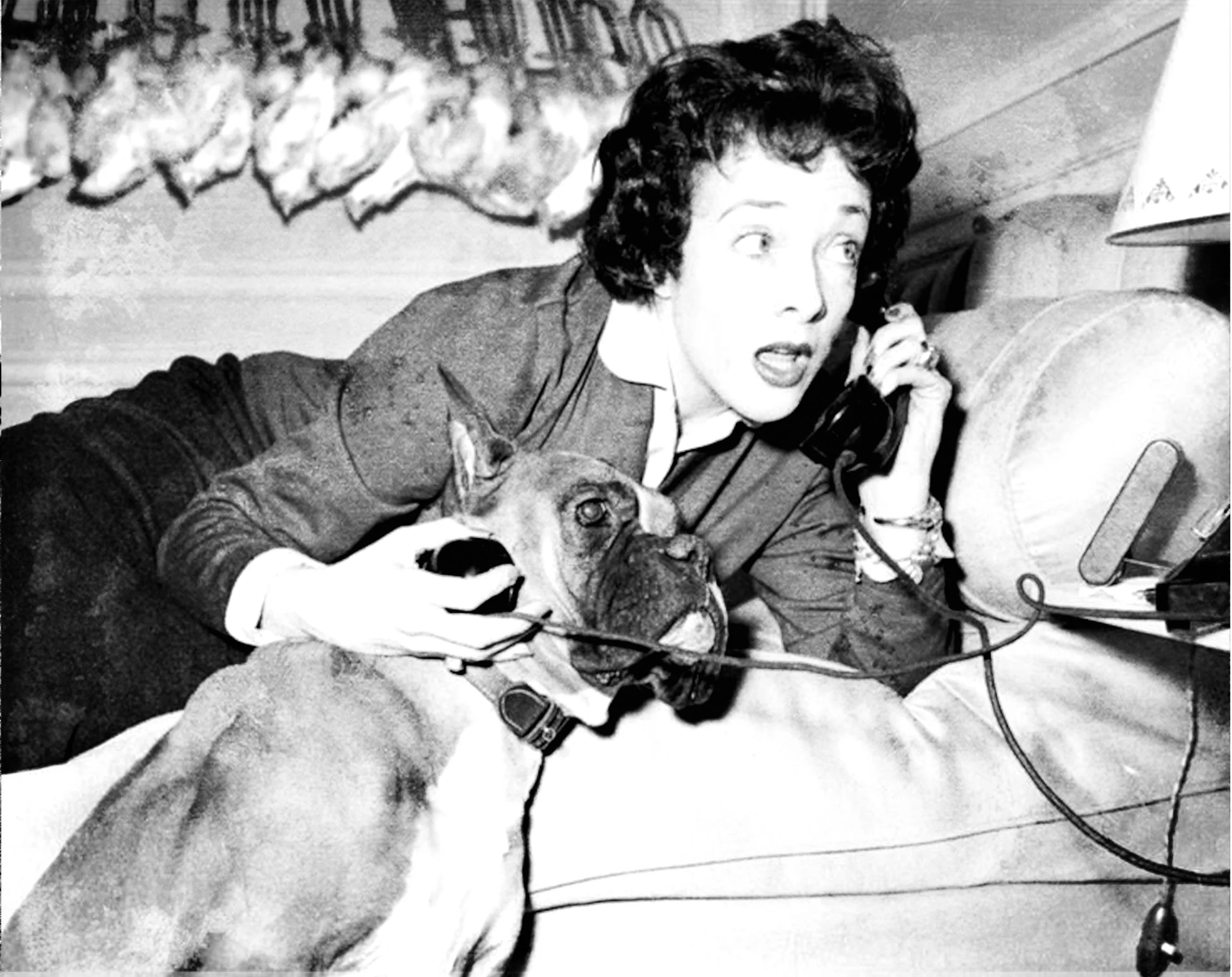
“The assumption that animals are without rights and the illusion that our treatment of them has no moral significance is a positively outrageous example of Western crudity and barbarity. Universal compassion is the only guarantee of morality."
- Arthur Schopenhauer, 'On the Basis of Morality'
Our Companions
Domesticated animals are deeply woven into human history and our everyday lives.
We share our homes, food, and time with pets in particular. As a result, many come to realise that each furry, scaly, or feathered friend has a unique personality with their own preferences, quirks, and ways of being entirely distinct from any other—including those of the same species.
These companions of ours teach us something else: that animals have the capacity for much of what we often mistakenly believe exists solely in humans.
Dogs grieve after losing someone close to them; anxious cats will over-groom to the point of harming themselves; birds recognise and remember human faces. Fish, too, perhaps the most misunderstood of all, demonstrate memory, social awareness, stress responses, and signs of play and personality.
These faculties exist beyond the creatures we decided to domesticate. Even those we may consider least likely to have feelings, personalities, or the ability for companionship (take this deadly, loveable alligator, for example) are proven to be entirely capable.
It is not our intention to anthropomorphise animals. We are fully aware their lived experience is different from our own. Nonetheless, without even pointing to the obvious yet oft-forgotten fact that we ourselves are animals, spend even a small amount of time with any critter, and it is undeniable they at least have a capacity for feeling in a manner we recognise in ourselves.
There's science, stories and videos aplenty online as evidence, but you needn’t rely on any of that when the proof is living in many of our homes.
The Others
The animals of this world don’t partake in the narratives humans construct to explain and control the mystery of life, but they must still be at its mercy.
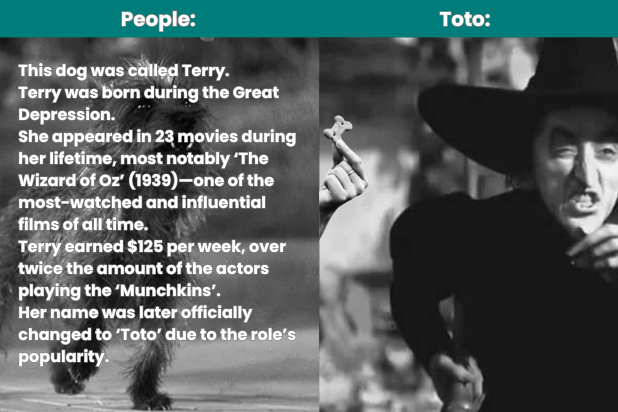
For some, this means they are celebrated, protected, fed, pampered, photographed, and dressed in novelty outfits. They are loved in the best possible way our faulty yet earnest, conditioned and thought-riddled manner of being can love.
For some, they are respected and revered, observed from afar and studied with awe and wonder.
Yet for others, in the unenviable position of being deemed useful to humanity in some regard, they are labelled a commodity and so exploited, confined, raped, killed, skinned, eaten.
Many years ago, humans needed animals in order to survive. Now, for much of the world, this necessity no longer exists.
Almost exclusively for sensory pleasure or preference alone, we have built a monster out of animal agriculture, and those gaining from its existence are not going to let it die easily. The monster survives on misinformation. In the case of what we're discussing here, the necessary deception is that those animals being forcibly impregnated, bred into disfigurement, held in cramped, miserable conditions, and killed long before Death has any right to come knocking are not the same as the ones we share our homes with or marvel at on our televisions.
It's a well-guarded truth that every single animal in those billions destined for slaughterhouses are not devoid of the traits we admire and protect in others.
How would we react if we learnt it was cats being suffocated to death in their millions, screaming in agony in CO₂ gas chambers, because some people enjoyed the taste of their flesh? How might we feel if we saw bitches restrained to have sperm pushed into their vulva by a gloved hand, only to later have their puppy snatched from them immediately after giving birth? It's so we can pour their milk over our cereal! No, it's not weird! You're weird for thinking it's weird!
Tragically—though we are sometimes loath to admit so—most people do know that all animals have unique personalities and can suffer and experience joy, just like our pets do. As we've already alluded to, the internet has made this easier to accept than ever before.
We can see videos of those fortunate few belonging to a species generally domesticated for consumption living instead as pets; we can watch them forming bonds, communicating, learning, being in pain, being rescued, being transformed, and enjoying actual lives as conscious, free beings outside a system which necessitates their suffering and premature death.
And yet, some people still differentiate between the pig who’s best friends with an eight-year old and the millions squeezed into farrowing crates right now. The only real difference is apparent ownership. Because the pig on a leash is a pet, he is cherished and protected. He is sacred.
This speaks to a more twisted trait of our culture that overshadows an instinctual inclination children easily understand: the learnt belief that compassion must be earned. That to be worthy of kindness, you must belong to someone. That your pain must matter to us personally before it matters at all.
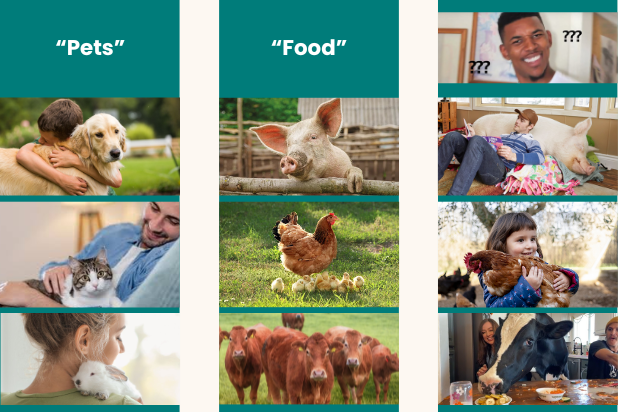
As an example of this, we once attended a barbecue where the guests were gushing over the host's pet chickens before later eating another chicken's shrink-wrapped body parts.
So, we might swiftly swipe past videos that expose this dissonance if we're about to indulge in our Christmas dinner with our dogs and cats sleeping contentedly nearby. To confront such a comparison could spoil the meal.
But fear not!
Even if we do watch a video of a turkey running to greet her human companion when he gets home and accept that what's carved in the centre of the table in a form hardly recognisable could once have been a living, feeling being, just like the pets we had showered with gifts that morning, there's always another handy portion of misinformation readily available. The ever-helpful monster of animal agriculture is more than happy to serve it, so we can relax and enjoy our sanctified celebration of peace on earth after all. Phew.
- H.R.
